Invisible Gorillas, Visible Slim Jims

» February 3rd, 2013

There’s a fascinating description of how human perception works (or doesn’t work) in Christopher Chabris’ and Daniel Simon’s book The Invisible Gorilla. As summarized by Daniel Kahneman, the authors:

[C]onstructed a short film of two teams passing basket­balls, one team wearing white shirts, the other wearing black. The viewers of the film are instructed to count the number of passes made by the white team, ignoring the black players. This task is difficult and completely ab­sorbing. Halfway through the video, a woman wearing a gorilla suit appears, crosses the court, thumps her chest, and moves on. The gorilla is in view for 9 seconds. . . .Many thousands of people have seen the video, and about half of them do not notice anything unusual.

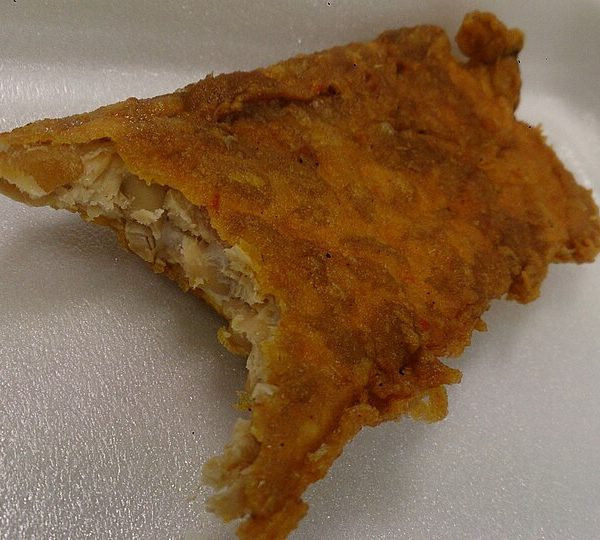
Veganism, or any fundamental transition in the way we live material life, isn’t just about what we eat and wear. It’s about how we think.  And how we think about food, in particular, has been homogenized to the point that we too often fail to see the gorilla on the screen. Make no mistake: this is by design. The potential to change our habits, to subvert the dominant power structure, is negated by largely hidden but monolithic forces telling us to, in effect, start counting. What happens when we take this directive is the quiet evolution of a food system unthinkingly based on unnecessary animal exploitation, monoculture, Monsanto, and Slim Jims.  Think about it, only a nation totally anesthetized, totally drooling all over itself, could allow something as vile as a Slim Jim to cross the border into the territory of the food supply.

The challenges we face when it comes to recognizing gorillas and fighting Slim Jims are so diffuse that most of us don’t even recognize that there’s a challenge. And when I say “us” I’m not just talking about the teeming Walmart-going masses. I’m talking about the foodie intelligencia as well. I just spent two days at a conference at the UT, sponsored by The Food Lab, called “Food, the City, and Innovation.” It was, on the whole, an extremely thought provoking (and incredibly well-run) couple of days, with insightful presentations by very smart and very educated people seeking to reconsider the whole idea of food and the (agri)cultures that shape it.

But what wasn’t said at this conference was as significant as what was said. It was hard for me not to notice, as my panel was introduced with a 10-minute film about the perfect cheeseburger (local farms, pastured beef, happy cows, artisan bakers!!) was the almost calculated effort to avoid ever using the “V” word. The most revolutionary thing we could do to bust up the foundation of the North American food system would be to eliminate the very products that make it possible to thrive. But as the proposals for innovation poured in (I played  small role in helping organize these submissions), it became clear that the Big Thinkers working in academia and the business world are content to keep counting, ignoring the gorilla while chattering away about change.

For me, the conference—which I’ll write more about this week—was an excellent reminder of why I blog, write, and advocate. There’s too much work to do, too many issues to highlight, too many paradigms to shift in order to highlight the gorilla in our midst. Staying quiet isn’t an option.


2 Responses to Invisible Gorillas, Visible Slim Jims

  1. Nadine says:

    Great post! I love the example of the gorilla and totally resonate with your conclusions. I find that often as humans we tend to get mired in the miasma of the small picture without ever stepping outside the box to look at the very large structural and cultural issues that create the very circumstances we wish to see changed. Until we address those big picture issues, a lot of the small stuff ends up lost. I suppose the question is how do we create change and address the system as a whole? For me, I’ve found an answer through individual example and moving away from deconstructing the paradigm and into constructing a totally new one based on the principles I’d like to see become mainstream, but this process relies heavily on faith.

  2. Mountain says:

    My apologies for focusing on the small stuff, but: intelligentsia. Unless it’s an homage to the Polish philosopher who coined the term, in which case: inteligencja.

    I first stumbled across the gorilla experiment in Daniel Gilbert’s Stumbling on Happiness. That whole field (affective forecasting) is really interesting;shows how little we understand ourselves– let alone other humans, let alone other animals.

Leave a Reply